

Boards in an Era of Rising Risk
Boards are operating in a time of increasing financial and geopolitical risk.
“Taking risk is a prerequisite for returns. It requires both sound analysis and a high level of awareness. Do these discussions receive sufficient attention in the boardroom—and is the board sufficiently aware of the range of possible outcomes the company must navigate?”
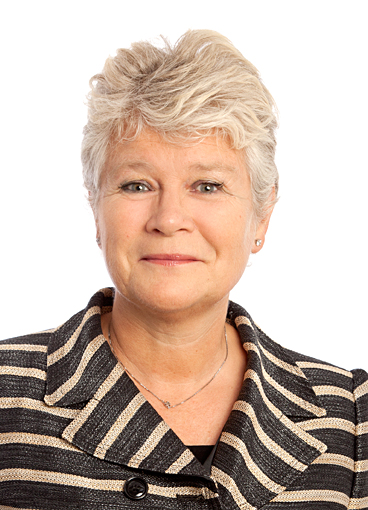
This is the question posed by Karin Bing Orgland, who brings extensive experience as both a chair and board member, as well as a senior executive in the financial sector.
Board work today is increasingly about navigating a complex and multifaceted risk landscape. Geopolitical instability, pandemics, capital market volatility, and structural shifts have made risk management a central element of the board’s strategic responsibility. Strategy cannot be meaningfully discussed without addressing risk—and the scenarios a company may face.
“One of the board’s primary responsibilities is to set the company’s strategy. And every strategy involves risk—financial, operational, and commercial,” says Orgland.
She underscores a critical point: risk is not something to be eliminated.
“You generally need to take risk to achieve sufficient returns. Risk has both upside and downside. What matters is being conscious of the risk you take—and why.”
This is where board maturity becomes visible: not in avoiding risk, but in defining the framework for it.
Risk Appetite Must Be Discussed—Systematically
According to Orgland, boards should engage far more explicitly and systematically in discussions about risk appetite.
“I believe many boards would benefit from more structured discussions around risk appetite and risk willingness in relation to risk capacity.”
There is an important distinction:
- Risk capacity refers to the company’s actual ability to absorb risk—financially, operationally, and organisationally.
- Risk appetite reflects how far the company is willing to stretch.
These must be aligned.
“It depends on the industry, the volatility of the business, and the organisation’s capability to manage and mitigate risk. It is also about the breadth of possible outcomes.”
Risk management is therefore also a question of experience and preparedness:
How accustomed is the organisation to volatility? How resilient is the balance sheet? How quickly can it adjust course?
Taking high risk can be appropriate—provided it can be managed or mitigated.
Currency risk, for example, can often be hedged in financial markets. Geopolitical risk, however, is far harder to insure against—particularly when it affects supply chains, market access, and structural conditions. In such cases, diversification—alternative suppliers or markets—becomes critical.
Scenario Thinking: An Underutilised Board Tool
The pandemic provides a clear illustration.
“I don’t believe many boards had seriously discussed the consequences of a pandemic before Covid-19. It was managed as it unfolded. We were training live.”
Orgland highlights scenario planning as one of the most effective tools available to boards.
“Scenarios combine operational, strategic, and financial risk factors. It is often the combination that makes situations complex—or creates significant opportunity.”
Boards should therefore not only identify individual risks, but understand how different risks may interact and reinforce each other. Equally important, organisations must train for these scenarios—practice builds capability and reveals hidden vulnerabilities.
And just as importantly, the risk landscape must be continuously updated.
“The risk picture must be reviewed regularly.”
She has seen strong results from reviewing an overall risk matrix on a quarterly basis—often alongside financial reporting. This creates alignment between strategy, risk, and market communication.
Liquidity Never Lies
Drawing on her financial background, Orgland is unequivocal:
“Liquidity never lies.”
Results can be explained. Forecasts can be adjusted. Cash flow reflects reality.
“Maintaining liquidity is critical—for navigating crises and for managing downside risk.”
Liquidity represents optionality. Without it, flexibility is significantly reduced.
For this reason, systematic review of liquidity and cash flow should be a high priority for boards. Orgland believes boards, in general, could place greater emphasis on liquidity risk—especially in times of uncertainty.
The Board’s Role in a Crisis: Support and Challenge
When risk materialises, clarity of roles becomes essential.
“The primary responsibility for managing a crisis lies with management. The board’s role is to support, remain accessible—and at the same time challenge to ensure the best possible decisions.”
Trust is critical.
“Trust is binary. Either the board has confidence in management’s ability to handle the situation—or it does not.”
As long as the board and management are aligned on a course of action, the board should stand firmly behind management. This creates predictability and stability within the organisation.
However, if trust is fundamentally weakened, the board must act.
“At that point, the board effectively has no choice.”
It is an undesirable situation—but part of the board’s responsibility.
The Pitfall: Overly Optimistic Forecasts
Management is closest to the business. This provides insight—but can also introduce bias.
“Those deeply involved in a situation may become overly optimistic—or at times overly pessimistic.”
The board’s role is to provide distance and perspective.
“The board must ensure realism—in both the numbers and the assessment of possible outcomes.”
This is not necessarily about building large buffers, but about thoroughly exploring what may happen if developments diverge from plan.
Without realism, organisations risk losing strategic flexibility. Overly optimistic plans can lead to insufficient financing and reduced room to manoeuvre.
Risk Also Creates Opportunity
Orgland is clear: risk is not only about downside.
“Risk is often a prerequisite for generating returns.”
She points to the retail sector during the pandemic as an example: some companies experienced extraordinary growth as market conditions shifted.
But opportunity requires preparation.
“What matters is having a plan for what to do if risk-taking does not deliver the expected return.”
Conscious risk can be a source of competitive advantage. Unconscious risk creates vulnerability.
Board Composition and Responsibility
Risk management is the collective responsibility of the board. In larger companies, the work is often prepared in audit or risk committees—but accountability rests with the full board.
Effective risk governance also depends on the right board composition.
“The board must have competencies that complement management—and the ability to elevate issues to a broader strategic level.”
If the board is not optimally composed, this must be addressed—through dialogue between the chair and the nomination committee. In well-functioning companies, this dialogue is ongoing and constructive.
One Piece of Advice for Boards
If she were to summarise:
“Discuss and align on the company’s risk appetite—in light of industry, strategy, and actual risk capacity.”
Because board work today is not about avoiding risk. It is about understanding it—
managing it with awareness, realism, and strategic discipline—and preserving room to act as uncertainty increases.
By Marita M. Christensen, partner i Narum Partners.